What is Baren
-
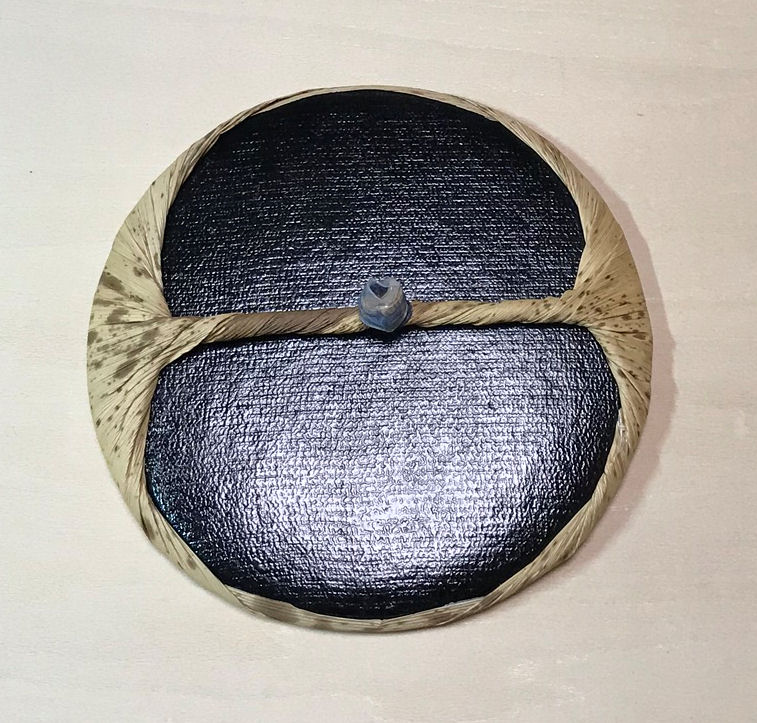
Hon Baren
-
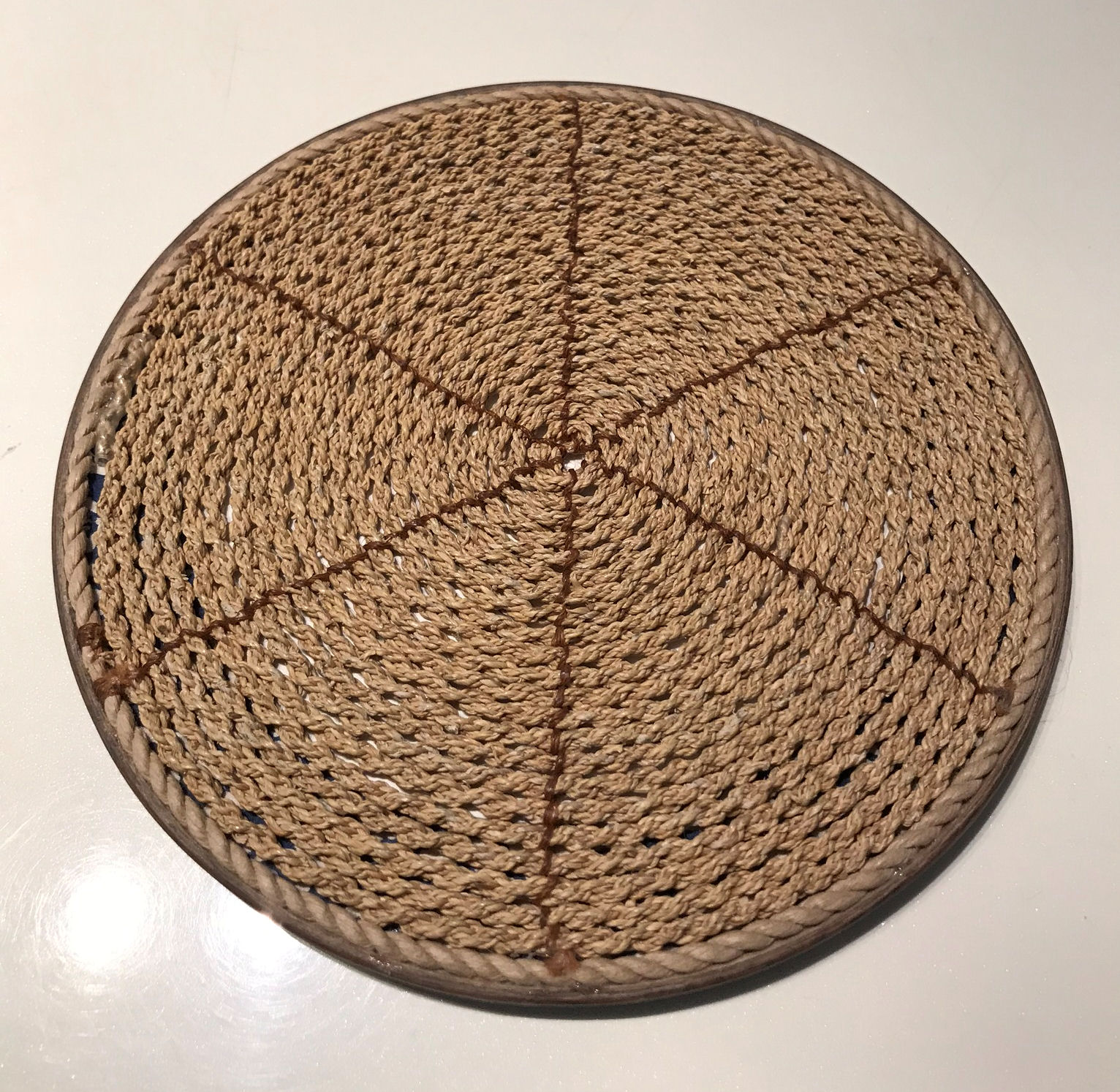
Shin
-
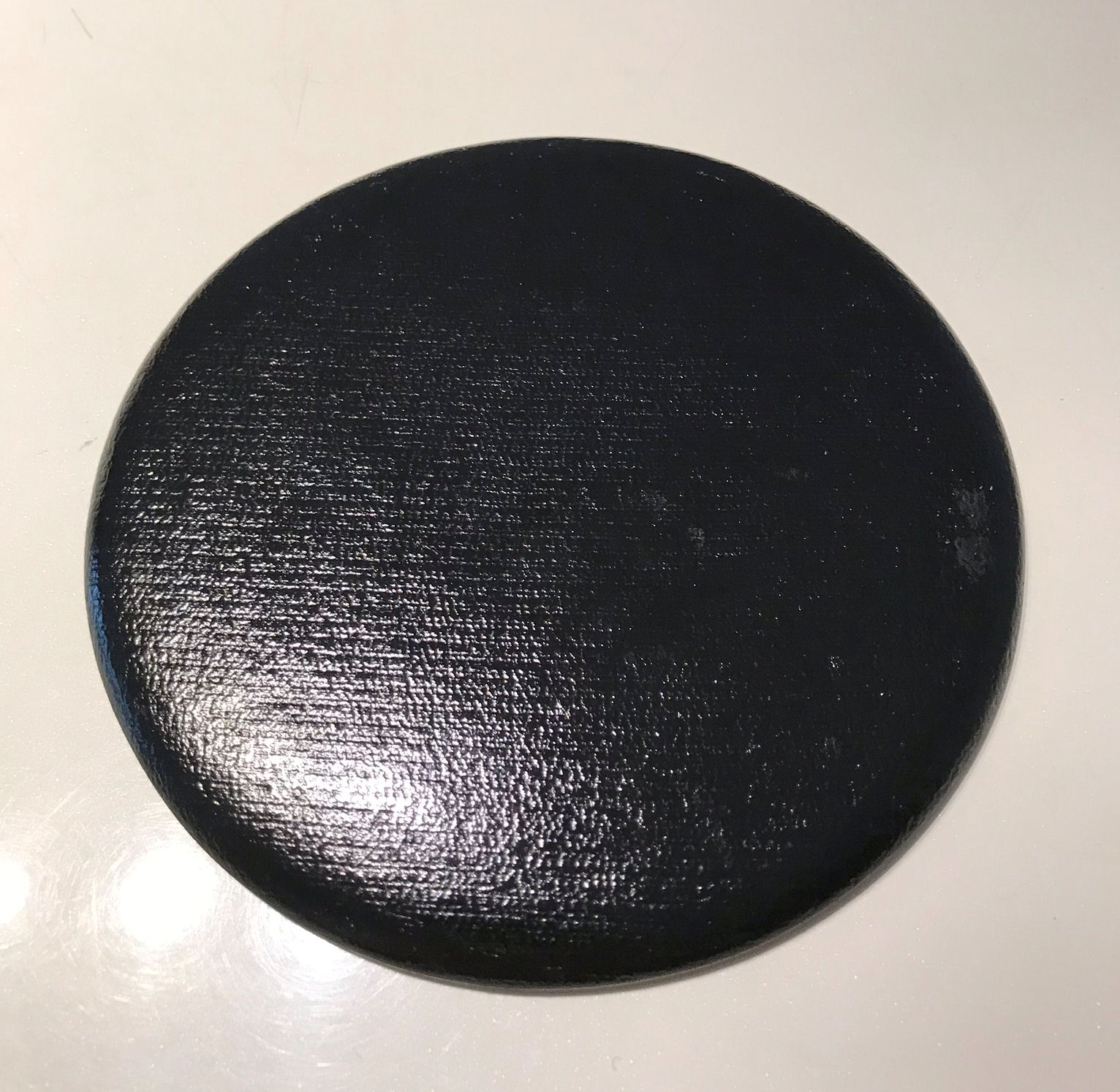
Ategawa
A baren is an indispensable tool in woodblock printing. Those who experienced
woodblock printing in elementary school in Japan will likely be familiar
with the baren wrapped in bamboo sheath, but it's not widely known that
its form is unique to Japan. It seems that the current form of the baren
was established at least around the time the division of labor between
ukiyo-e artists, engravers, and printers was established during the Edo
period. Barens were apparently made by printers themselves as their own
tools.
The barens we used in elementary school woodblock printing classes, costing
tens to hundreds of yen, were often made of cardboard wrapped in bamboo
sheath. While they fulfill their role of transferring ink from the block
to the paper, they are weak and cannot produce a powerful print. On the
other hand, professionals seek barens that can cleanly print fine lines
and intricate carvings, or barens that can evenly print large areas—barens
that can perform printing according to their purpose. Therefore, professional
printers use several different baren depending on the printing task.
The characteristics of a baren are determined by the material that creates
the "contact" between the outer bamboo sheath and the backing
leather. Authentic baren, including genuine baren, use a core made of twisted
bamboo rope wound in concentric circles. Depending on how this twisted
bamboo rope is woven, it's possible to create baren ranging from delicate
ones for printing thin lines to more powerful ones for evenly printing.
While authentic baren made with a bamboo core offer a wonderful feel and
effect, their production is time-consuming and therefore expensive. As
a result, inexpensive substitute baren are available for amateurs and the
general public. These substitute baren include those made from braided
rope hardened with a hardening agent, those with bearings, and those made
of plastic with textured surfaces.
Currently in Japan, Hidehiko Goto/Kikuhide is a leading expert in the production
of traditional baren used by professional printers. His barens are favored
by professional printers, contemporary printmakers who handle everything
from carving to printing themselves, and amateur printmakers aiming to
create authentic prints.
Besides making baren, Hidehiko Goto has also been running a baren school
in Ginza, Tokyo since 2012, with the aim of promoting and preserving the
traditional Japanese baren. I also enrolled in the school in 2013, receiving
instruction in techniques such as baren production, adjustment, and re-wrapping.
Currently, I make, adjust, and re-wrap all the baren I use myself.
The Traditional Baren
The baren is the Japanese handheld printing disk. It evolved from Chinese
precedents but is designed specifically for printing mokuhanga. Many varieties
are available to artists today that were difficult to find outside Japan
only few years ago. Successful printing can be done with many types of
baren. The best choice will depend on the kind of printing job and the
skill of the artist as well as the cost of the tool. Experienced artists
keep more than one type of baren on hand for different kinds of printing
tasks. Less expensive modern versions of the baren are available online
and at some art supply stores, but the hon baren, the carefully made true
baren, must be special ordered.
The Ategawa
The ategawa backing disk of the hon baren is made from up to fifty layers
of thin washi dried and shaped on a wooden form. The paper is first treated
with astringent fermented juice from unripe persimmon to make it strong
and waterproof, and then one sheet at a time is glued together over a wooden
form, leaving a lip around the margin to hold the coil of the shin in position.
The glue used is made from the starch of a fern, which is stable to prevent
warping and has very little body.
The Takenokawa
This is the outer sheath of a bamboo stalk, called a culm sheath, which
protects a new shoot as it sprouts from the side of the bamboo stalk. The
sheaths drop off at a certain season and must be collected promptly before
they rot on the ground.
The Shin
The inner coil of the baren, the shin, is made from strips of the outer
fibers of the bamboo sheath, after the softer inside tissue has been peeled
away. The strips are sliced lengthwise into thin 1mm, 1.5mm or 2mm strips,
depending on the desired strength of the finished baren. Wider strips will
create a coarser, stronger shin coil.The strips are twisted together with
new strips added in as it lengthens. These strings are themselves twisted
together to make the 4-,8-, or 12-strand baren. This complex twisted strand
is finally coiled into a spiral, which is tacked together with thread so
it remains flat as it sits in the ategawa. Printers often have several
strengths of baren for different jobs, for example, a fine one to print
the delicate lines of a key block and a coarser one to print broad, flat
areas. A hon baren can cost upward of thousand dollars and requires careful
maintenance.
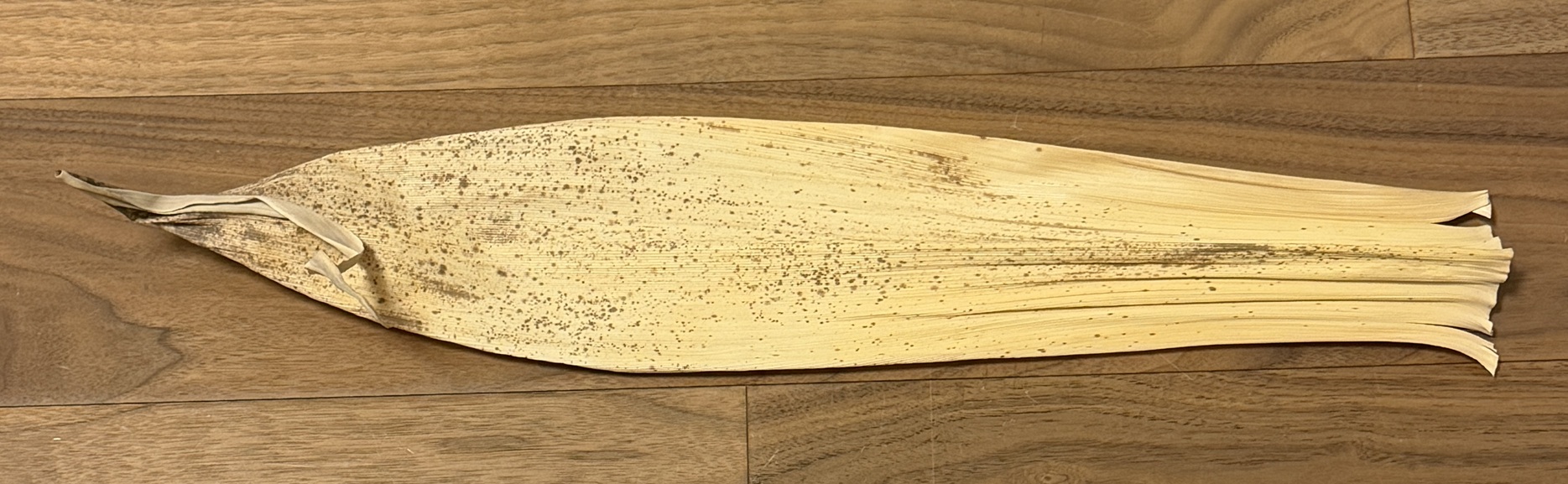
Takenokawa (Bamboo sheath of Kashrodake only available in Yame Kyusyu)
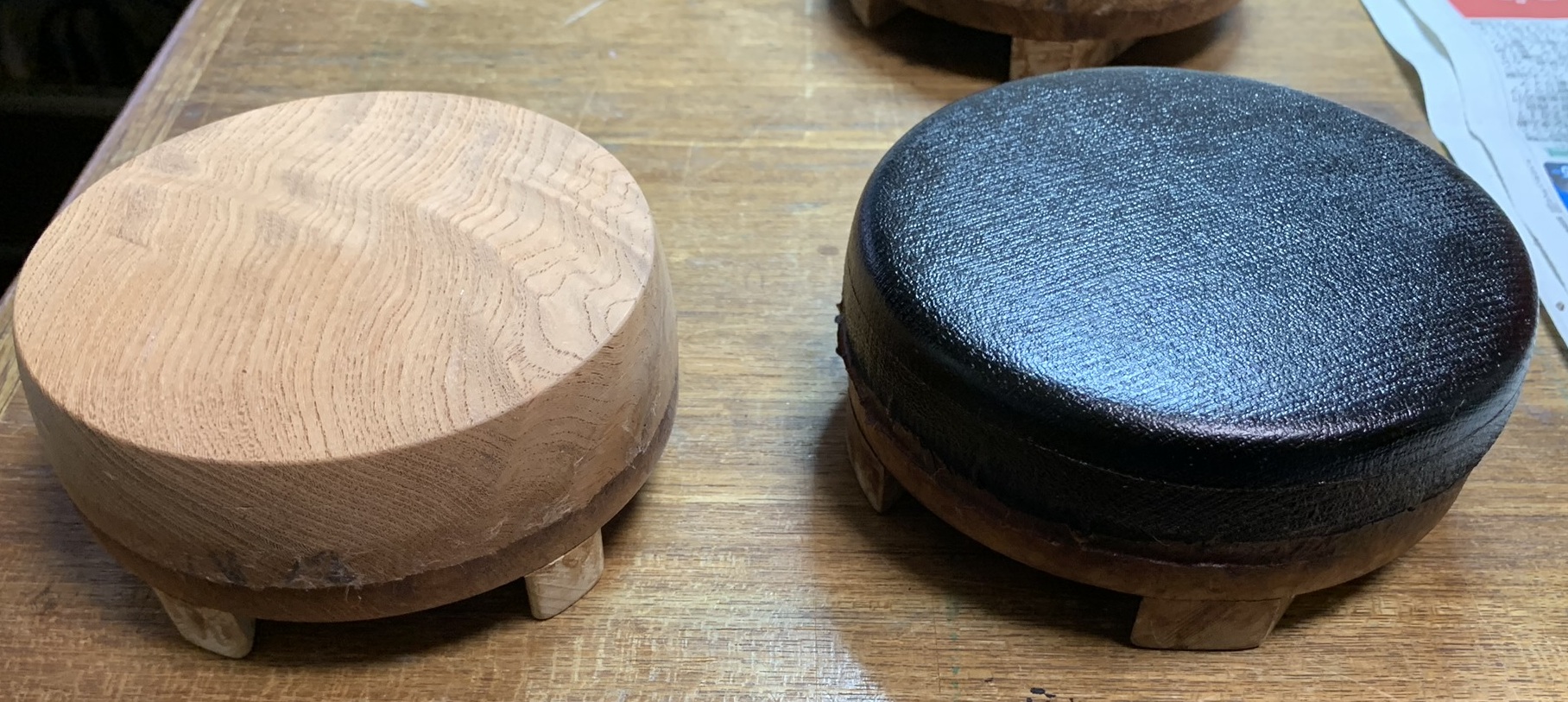
Left:Honbaren Ategawa wooden form, Right:Work finished fifty layers of washi and finished with Japanese lacquer.
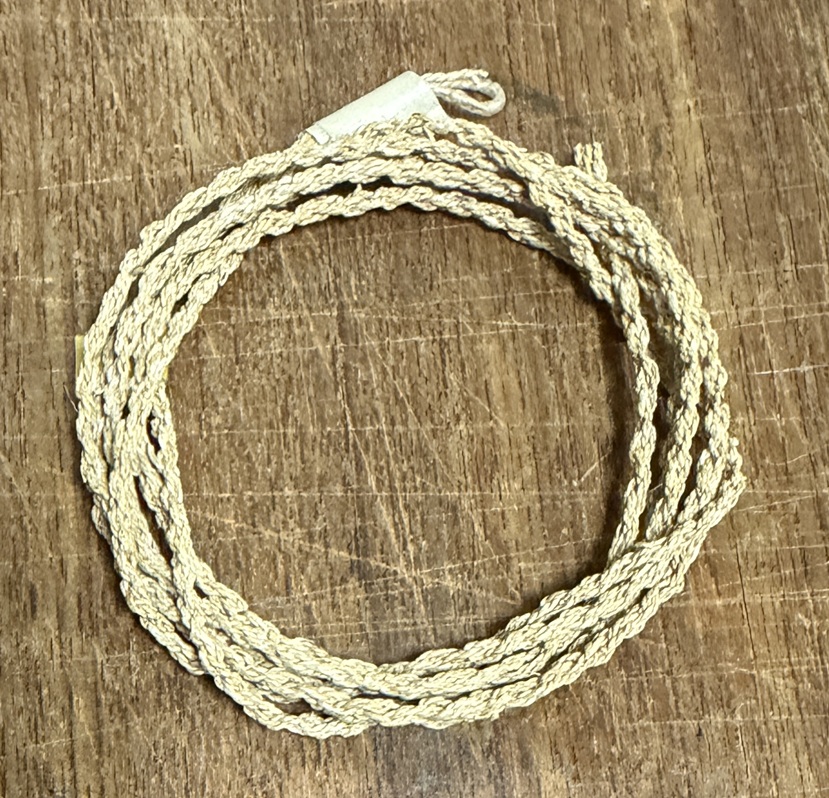
Twisted and woven bamboo rope before coiled.